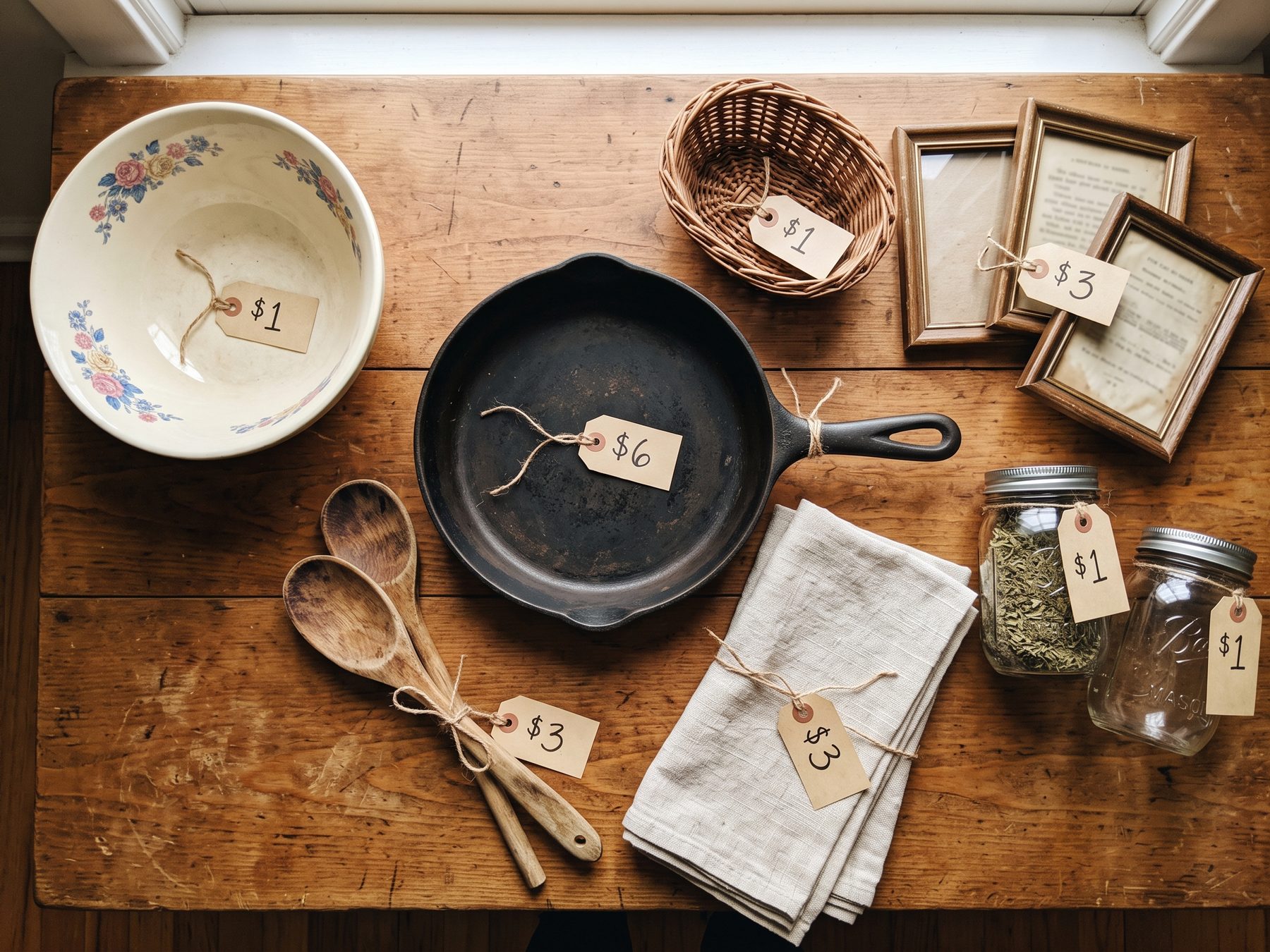
If the thrift store is the minor leagues, an estate sale is opening day. It’s a whole house — kitchen, garage, linen closet, the good cabinet nobody was allowed to touch — priced to disappear in one weekend. And here’s our local advantage: Pinellas County is one of the best estate-sale markets in America, because people have been retiring here with their best things for seventy years. The cast iron, the Pyrex, the solid teak — it all eventually comes up for sale, usually on a Friday morning, usually with the A/C blasting.
But estate sales have rules, rhythms, and a little bit of theater, and your first one can feel like showing up to a game everyone else has played for years. This is the field guide I wish someone had handed me.
Finding the good ones (the photos never lie)
Nearly every sale in the county gets listed on the big estate-sale sites, with photos, a day or two ahead. The listing photos are your scouting report, and I read them like a detective. Lots of photos of one glass display case and nothing else? Collector sale — dealers will be camping at dawn, skip it. Photos of a full garage, a crowded kitchen, closets still holding clothes? That’s a real whole-house sale, the kind where the everyday treasure is priced by someone trying to empty a room, not fund a retirement. I also zoom in on the backgrounds: the pan sitting unphotographed on the stove in picture twelve is half the reason I show up.
One Pinellas-specific tell: condo sales near the beaches are small but mighty — compact kitchens where everything was good quality because there was only room for the good stuff. House sales in the older neighborhoods of St. Pete, Seminole, and Largo run deeper: garages full of tools, Florida rooms full of rattan, and kitchens that cooked for fifty years.
The whole strategy is the calendar
Most sales run Friday through Sunday, and the price of everything depends on which day you walk in. Friday is full price and full selection — that’s the day for the thing you actually, specifically want, because it will not be there Sunday. Saturday is the comfortable middle. Sunday is half-price day at most sales (it’s usually printed right in the listing), and the last two hours of Sunday are the closest thing Florida has to a free-for-all — the company would rather sell a box of kitchenware for $5 than haul it out.
So here’s my beginner’s rule: go Friday to learn, go Sunday to buy. Walk a Friday sale with your hands in your pockets and just read prices — it calibrates you fast. Then spend your actual money on half-price day, when a $12 Dutch oven becomes a $6 one and nobody blinks.
How the door works
Busy sales use a sign-up sheet or numbers at the door, often starting an hour before opening — if the listing says “numbers at 8,” the dealers are there at 7:40. You don’t need to be. The frenzy is for the jewelry case and the mid-century furniture; the $4 cast iron skillet is still sitting on the stove at 10:30. Bring cash in small bills (many companies take cards now, but cash still smooths every transaction under $20), a tote bag or a box in the trunk, and a tape measure — the same one from my testing-before-you-buy routine, which applies at estate sales doubled, because everything here is sold as-is with no return rack.
Haggling etiquette, since beginners always ask: on Friday, don’t. On Sunday, politely bundle — “would you take $10 for all three?” is the native language of half-price day, and the answer is almost always yes.
What a beginner should actually buy
Skip the categories that need expertise — art, jewelry, “antiques” with four-figure tags — and go where the value is obvious and the testing is easy. The kitchen first, always: estate-sale kitchens are where I’ve found Griswold-era cast iron for $5, vintage Pyrex for a dollar a bowl, and knives that just need ten minutes on a stone. (This is the single cheapest way to build the $25 thrift-store kitchen — estate-sale prices routinely undercut the thrift store.) Then linens — real cotton and linen tablecloths for a dollar or two. Then the garage: hand tools, clamps, and garden gear at prices that make the hardware store feel like a prank. Everything on my always-buy list applies here, just cheaper.
And one quiet category nobody fights over: the pantry-adjacent stuff. Canning jars, casserole dishes, stockpots — the unglamorous workhorses that turn into $2 dinners for the next thirty years.
The rule underneath all of it
An estate sale rewards a plan the way a thrift store rewards persistence. Read the photos, pick your day on purpose, bring cash and a tape measure, and buy the things you already know how to judge. And be kind in the house — you’re walking through somebody’s whole life, and the family is sometimes in the next room. Treat it with a little grace. The deals are better when you’re not grabbing.